


What Is Handmade Paper? Why It Makes Wedding Invitations Feel Different
July 7, 2026
published on
filed under
Before your guests read a single word, they’ll touch your invitation. They’ll turn it over in their hands, run a thumb along the edge, maybe hold it up to the light without even realizing they’re doing it.
That moment — before the words, before the RSVP card, before any of it — is where handmade paper does its quiet work.
Most people have never held a sheet of truly handmade paper. And once they have, they never forget it.
Here’s what makes it different, and why it might be exactly what your wedding invitations are asking for.
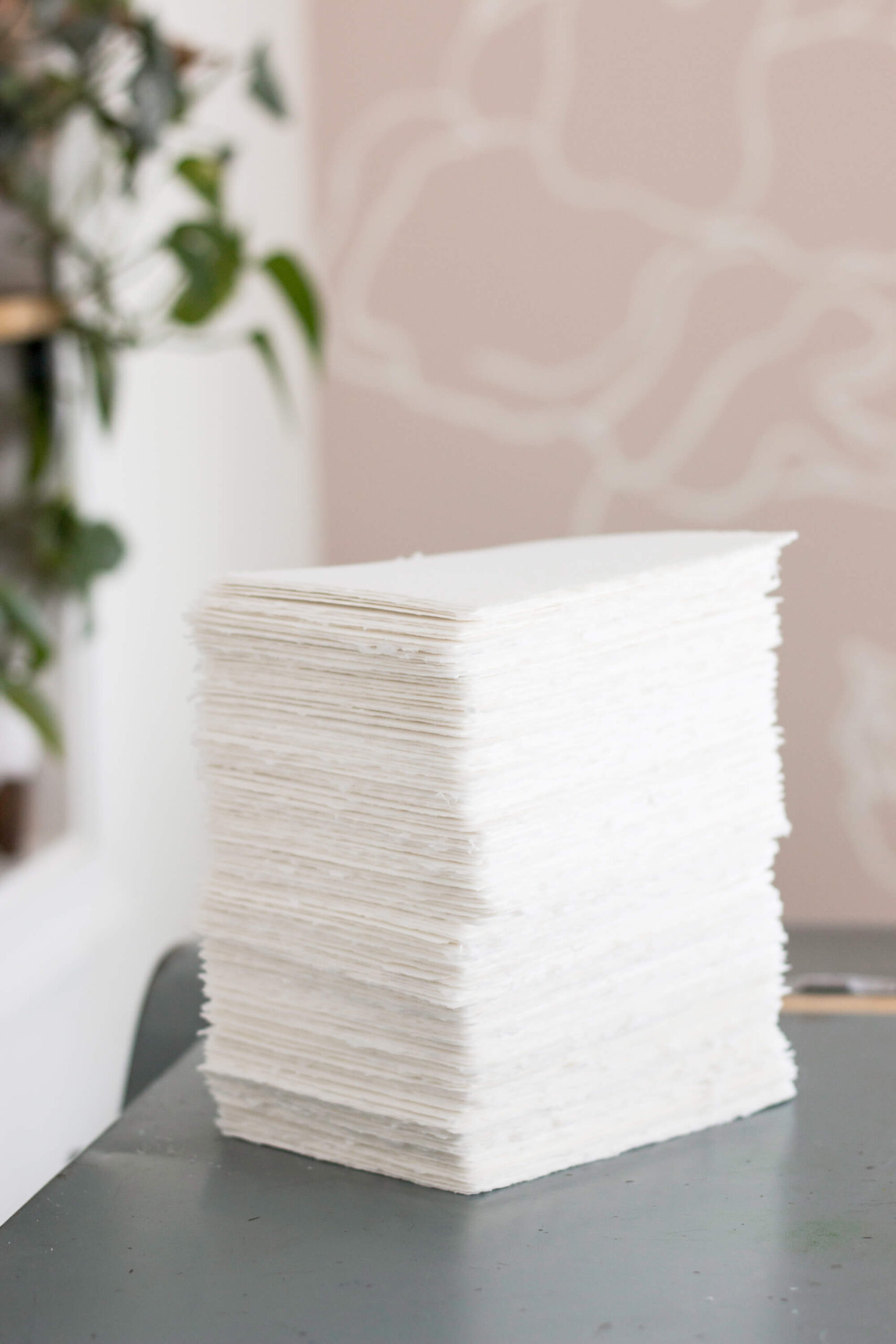
the edges aren’t torn. they’re born that way.
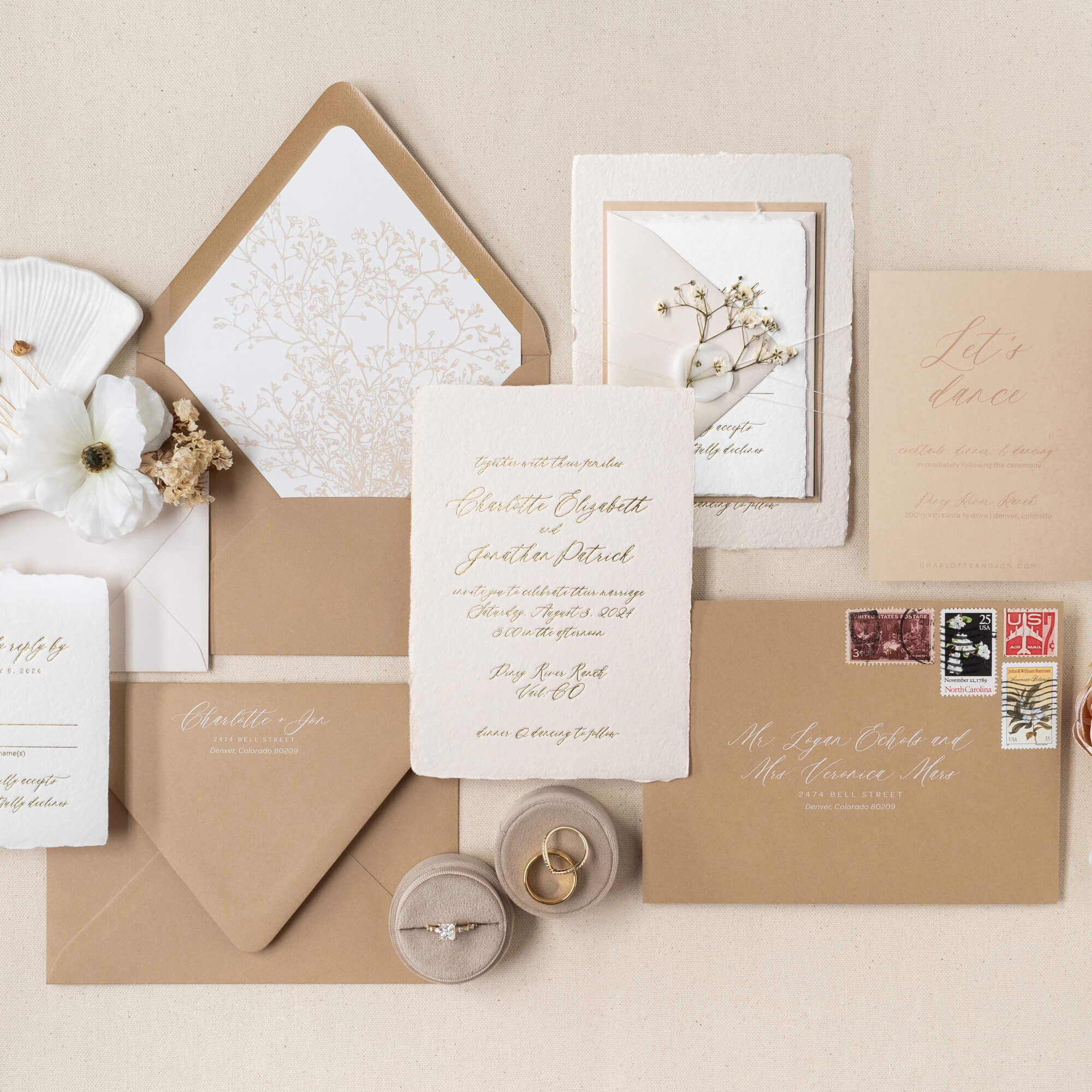
That soft, feathered edge you’ve seen on beautiful invitation suites? It’s called a deckle edge, and it isn’t cut, torn, or faked with a special scissor.
It’s the natural fingerprint of the papermaking process itself — the place where wet pulp meets the edge of the mould and settles exactly where it wants to. No two sheets deckle the same way twice.
There’s something worth sitting with in that. In a season of your life defined by decisions — the venue, the dress, the seating chart — here’s one detail that simply happens the way it’s meant to.
It can’t be engineered into perfection. It’s already perfect, in the way that handmade things are: a little irregular, entirely honest, unmistakably real.
made from what already existed
A lot of handmade paper starts its life as something else — cotton scraps from garment production, recycled fibers, plant matter that would otherwise be discarded. Papermakers beat these materials down into pulp, then build them back up, sheet by sheet, into something new.
It’s a nice thing to know, if you care about where things come from. Your invitation isn’t just paper. It’s a small act of transformation, and it carries that history quietly, in its fiber.
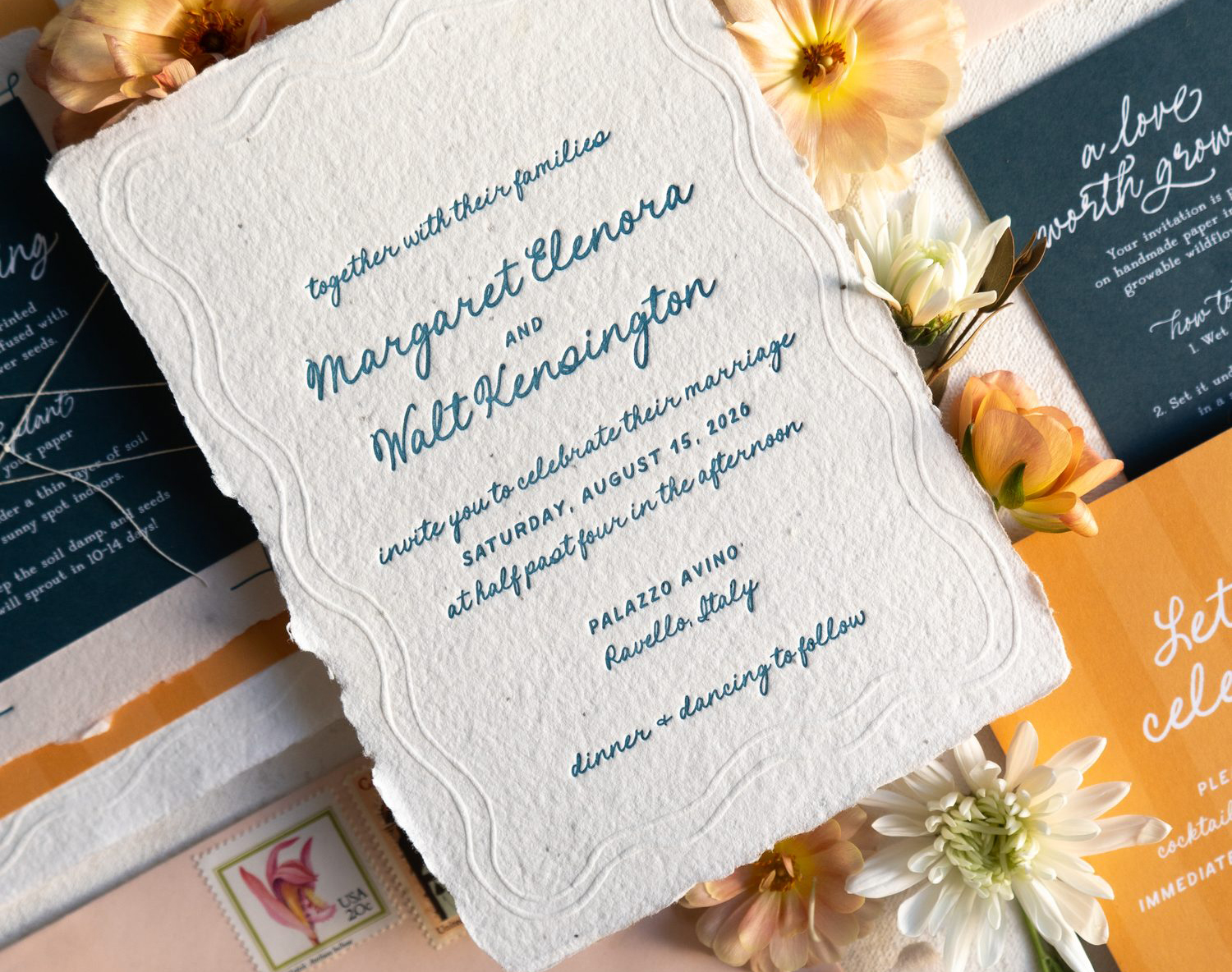
zero waste, by design
Here’s a detail most people never think to ask about: handmade paper is typically made to the exact size it needs to be.
Papermakers pull each sheet using a mould sized for the final product, which means there aren’t stacks of trimmed-off scraps piling up on a factory floor somewhere. What gets made is what gets used.
Compare that to standard commercial paper, cut down from massive rolls with the excess discarded. Handmade paper skips that step entirely. It’s efficient in the truest sense — not fast, but exact.
soft. fluffy. substantial, all at once.
This is the part people are least prepared for the first time they feel it.
Handmade paper isn’t dense in the way that most fine paper is. It’s soft — almost cloud-like — and textured in a way that catches light differently across the surface.
But don’t mistake soft for flimsy. It’s often thicker and more substantial in the hand than anything printed on a standard press.
It’s an unusual combination: something that feels delicate and sturdy at the same time. Which, if you think about it, is a fairly good description of a marriage, too.
That texture is also part of why handmade paper and letterpress printing are such a natural pair. The give in the paper lets each letterpress impression sink in deep, creating that rich, dimensional feel you can trace with your fingertip. You’re not just seeing the print. You’re feeling it.
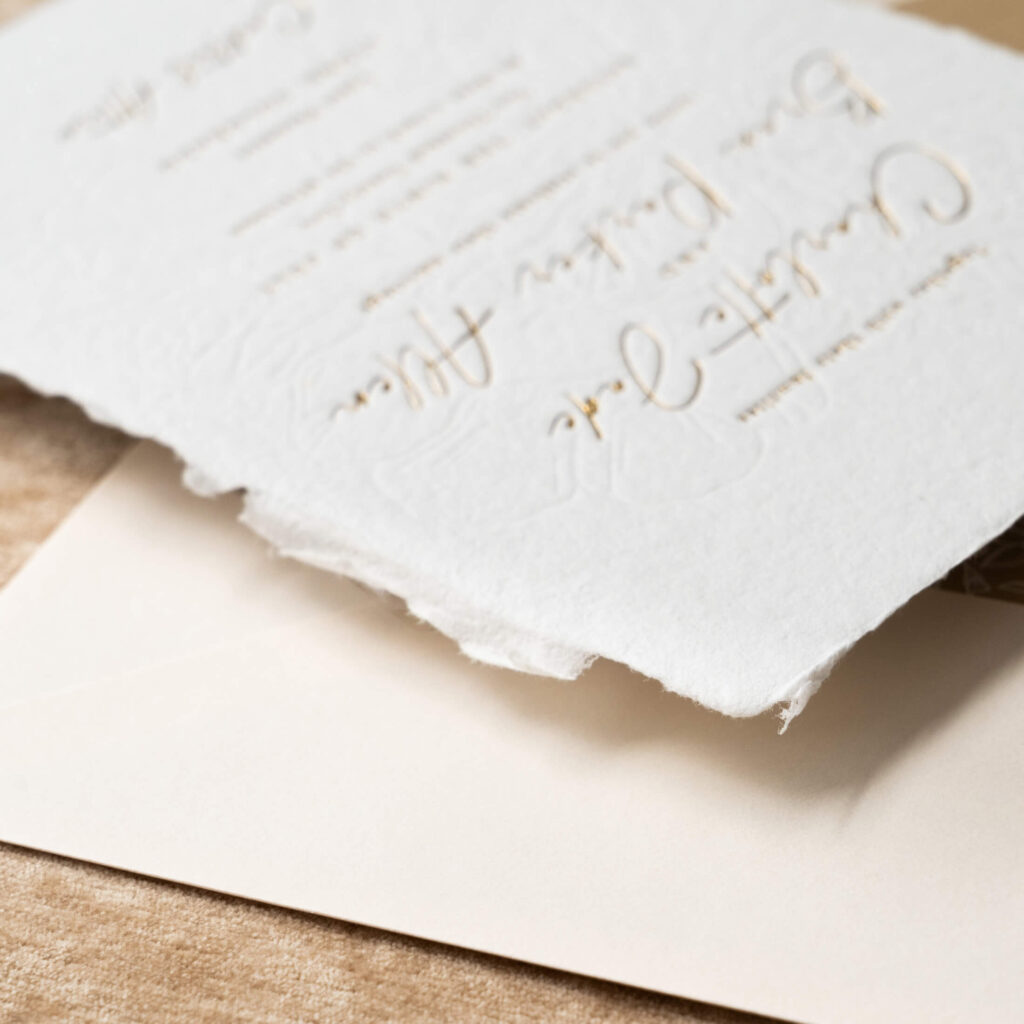
small batch, by necessity — not by trend
There’s no version of handmade paper that scales up into a factory. The process resists it.
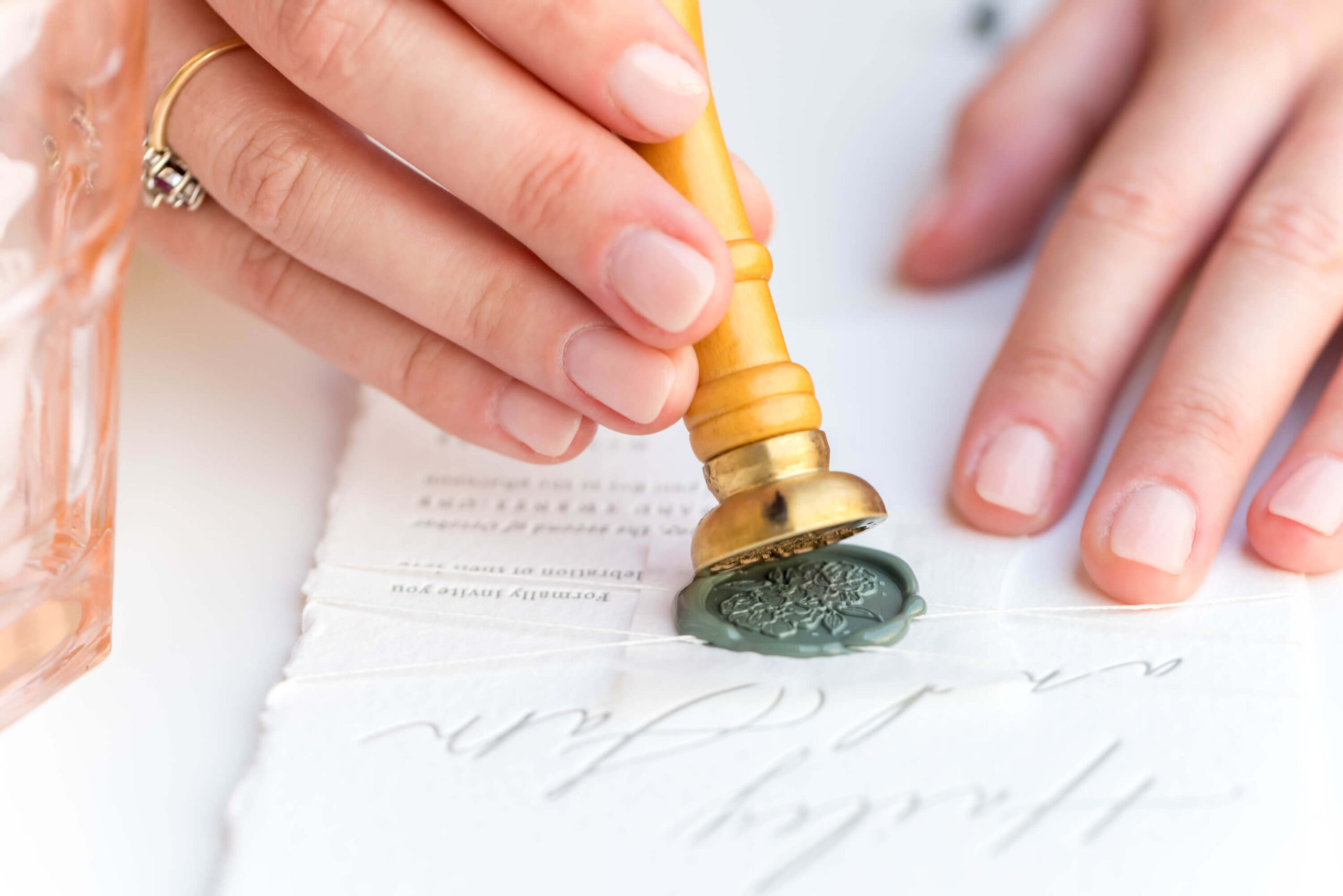
Every sheet is formed by hand, one at a time, pulled from a vat, pressed, and dried with real attention paid to each one. That’s exactly why it’s usually made by small studios and independent papermakers rather than big mills — the craft simply doesn’t bend toward mass production.
What that means for you: your invitations were made by people, not machines, in small quantities, with care that doesn’t scale down when the batch is small.
It’s slow-made in a world that mostly isn’t. And slow-made things tend to hold their meaning a little longer.
why it’s worth choosing for your invitations
Your wedding invitation is the first physical object your guests hold that represents your day.
Before the ceremony, before the toast, before any of it — there’s an envelope, and then there’s paper. Handmade paper turns that first touch into something worth pausing over. It tells your guests, quietly and without a single printed word, that this day was made with intention.
It won’t be identical to anyone else’s. It won’t be mass-produced, or perfectly uniform, or entirely predictable — and that’s exactly the point. It’s a little bit like the marriage it’s announcing: made by hand, made to last, and made because someone cared enough to do it the slower way.
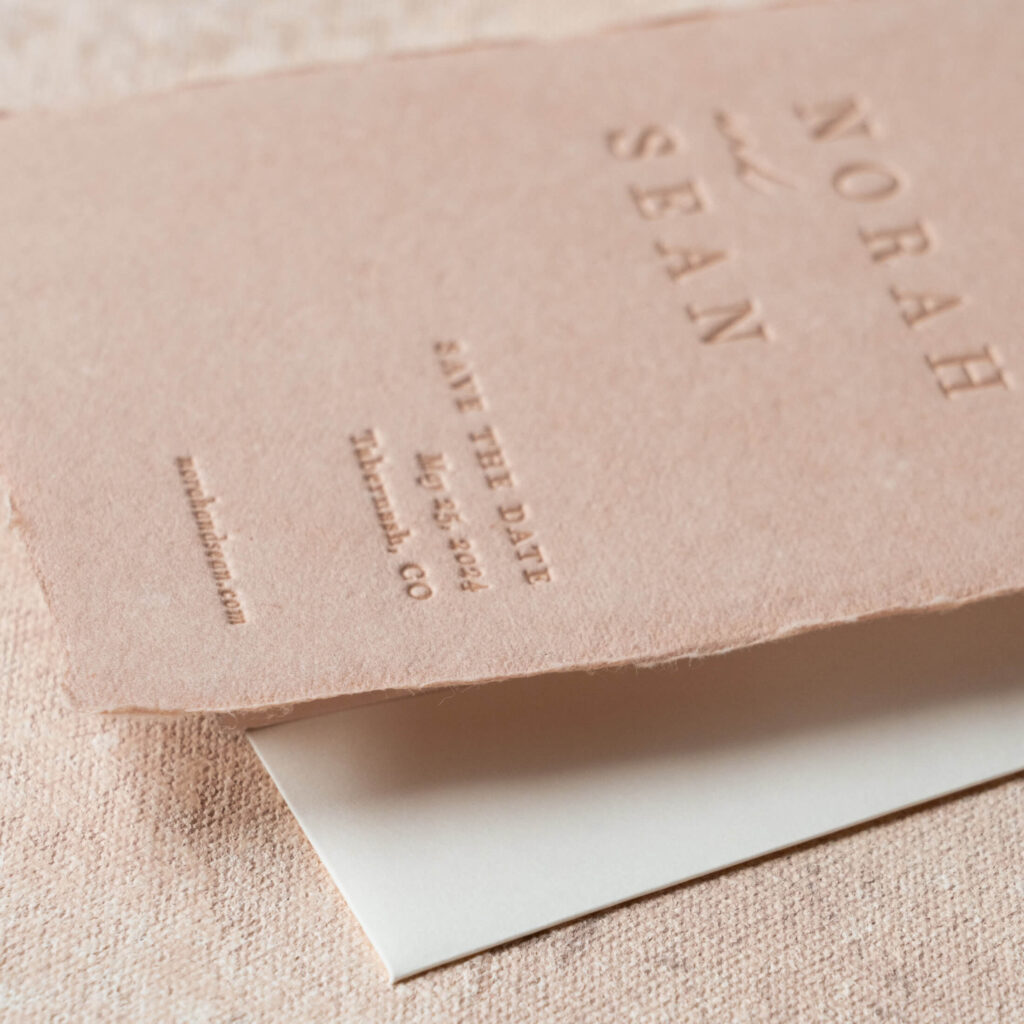
want to make that kind of impression for your wedding?
Terra Paper creates letterpress wedding invitations exclusively on handmade paper, with the added option for seeded paper your guests can plant.
Order samples >
Shop designs >
featured posts
Showit Website Design by With Grace and Gold | Images Courtesy of grace and ardor