


Seeded Paper Wedding Invitations: What They Are and How They Work
August 12, 2026
published on
filed under
Most wedding invitations end up in a drawer, a landfill, or a trash can.
And the landfill part is worth pausing on. Wedding invitations are inherently temporary objects: they’re designed to mark a moment, carry important information, and eventually disappear. But with materials like acrylic, wood, synthetic wax seals, or specialty finishes that can’t be recycled, that ending often means becoming trash.
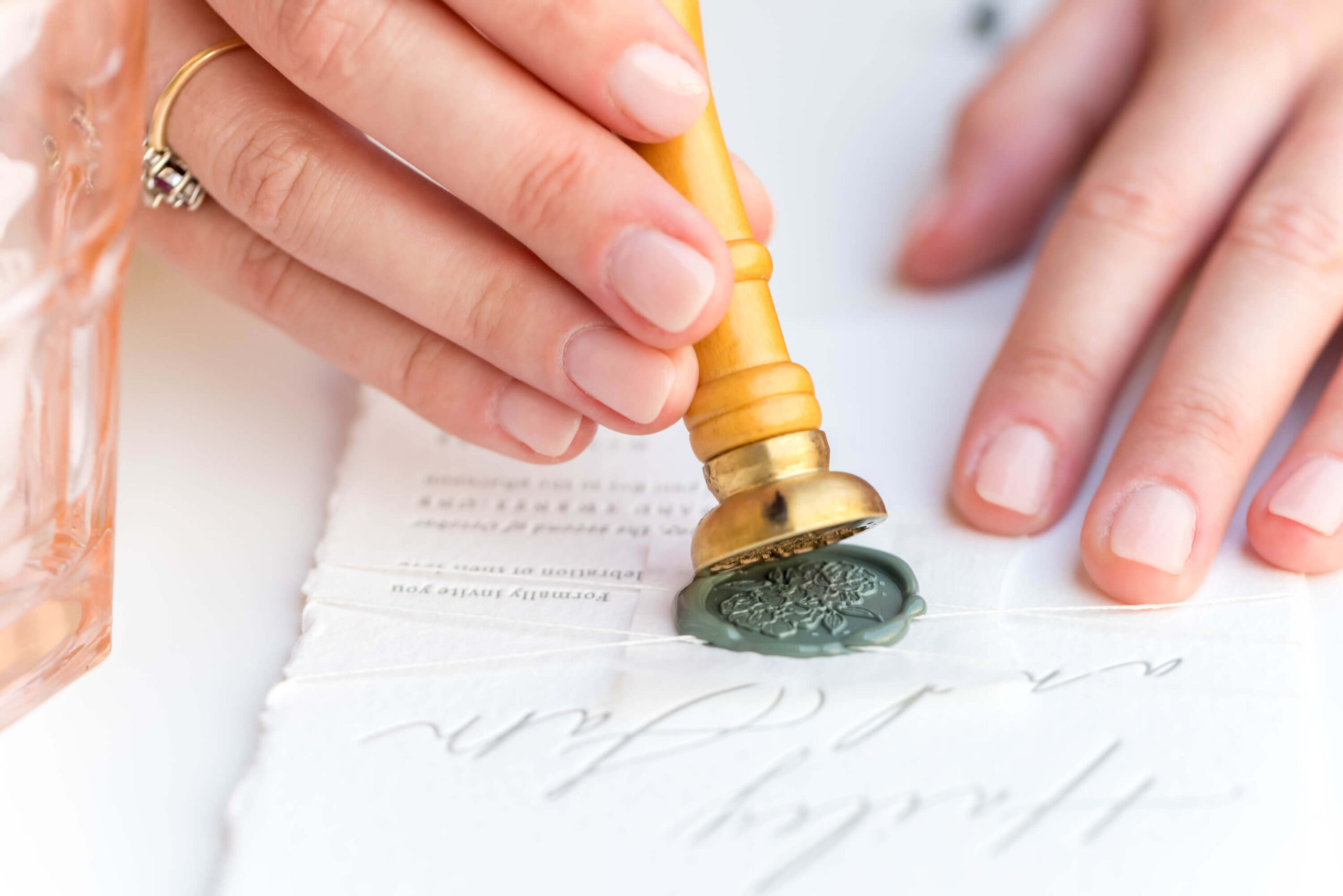
(Mine are biodegradable, for what it’s worth. Wax seals included.)
But “disappear” doesn’t have to mean “become trash.”
Seeded paper changes the ending of that story.
Instead of being thrown away, your invitation gets planted. The paper goes into the soil, the seeds germinate, and a few weeks later, those tiny seeds can become wildflowers. Same paper. Same design. Completely different afterlife.
Here’s how it actually works.
what seeded paper is
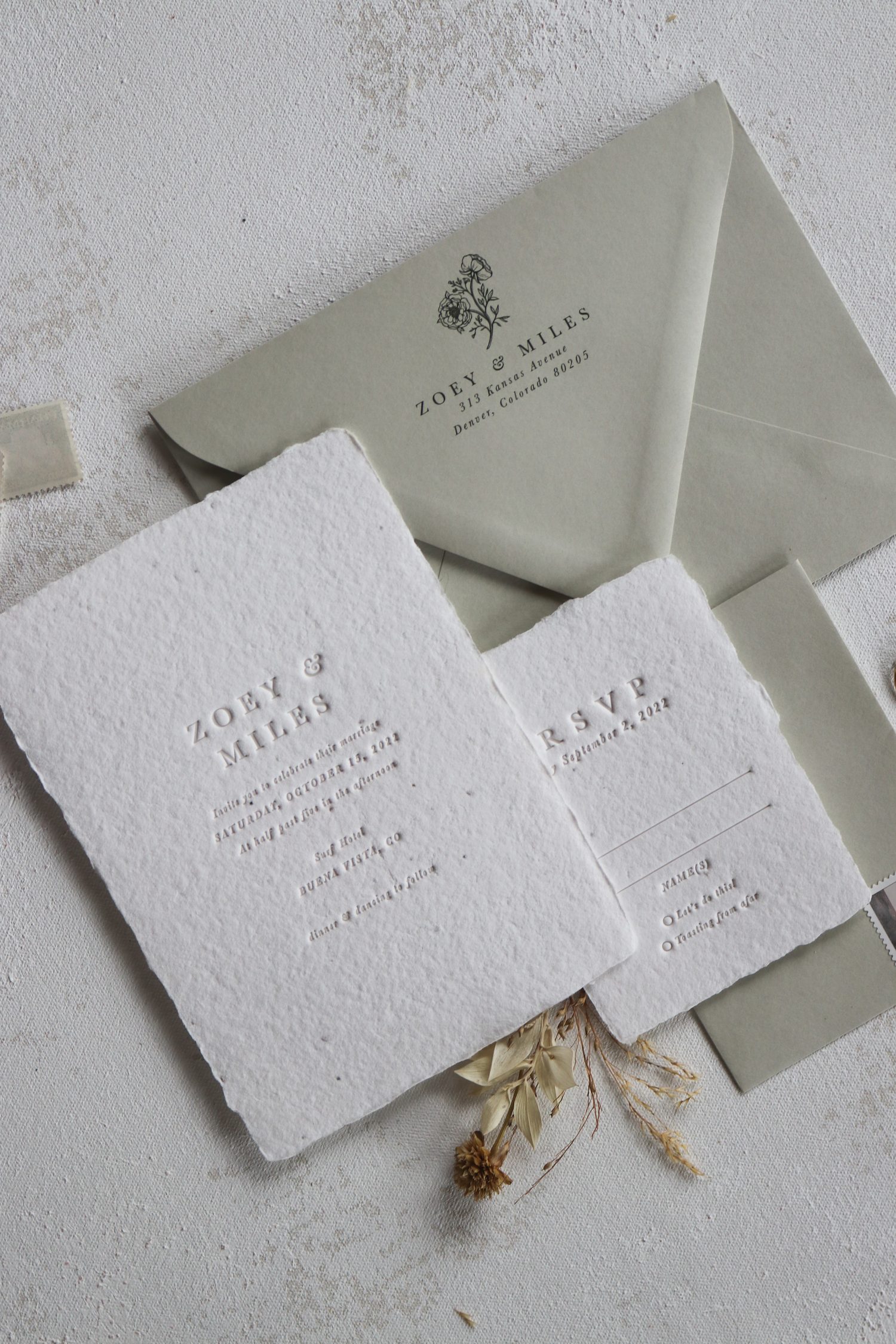
Seeded paper is handmade paper with real wildflower seeds pressed into the pulp while it’s still wet.
It’s made from recycled cotton fiber rather than wood pulp, so it’s tree-free and zero-waste by design. The seeds are folded in during the forming process, then the sheet is pressed and air-dried with the seeds sitting dormant inside it.
At Terra, the blend is poppies, black-eyed Susans, and sweet alyssum — hardy, generous growers that do well across most climates and bloom in a range that flatters just about any palette.
It’s also the thickest handmade paper I’ve ever come across. Soft, deckle-edged, and substantial enough that you feel it before you read it — the kind of weight that reads as luxury the second it leaves the envelope.
what it actually looks like
This is the question I get most, and I understand why. “Seeded paper” can conjure something crunchy and craft-fair.
It isn’t.
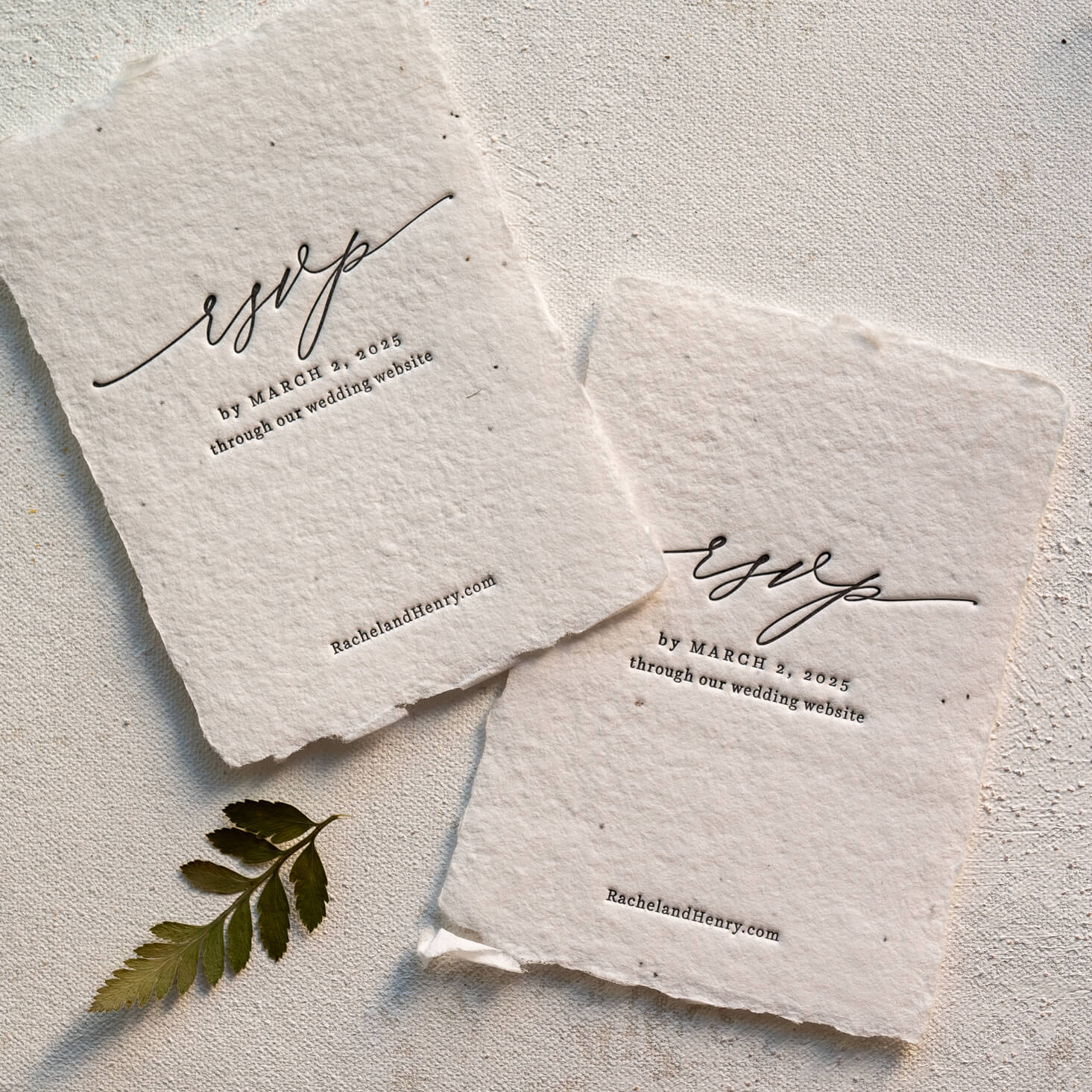
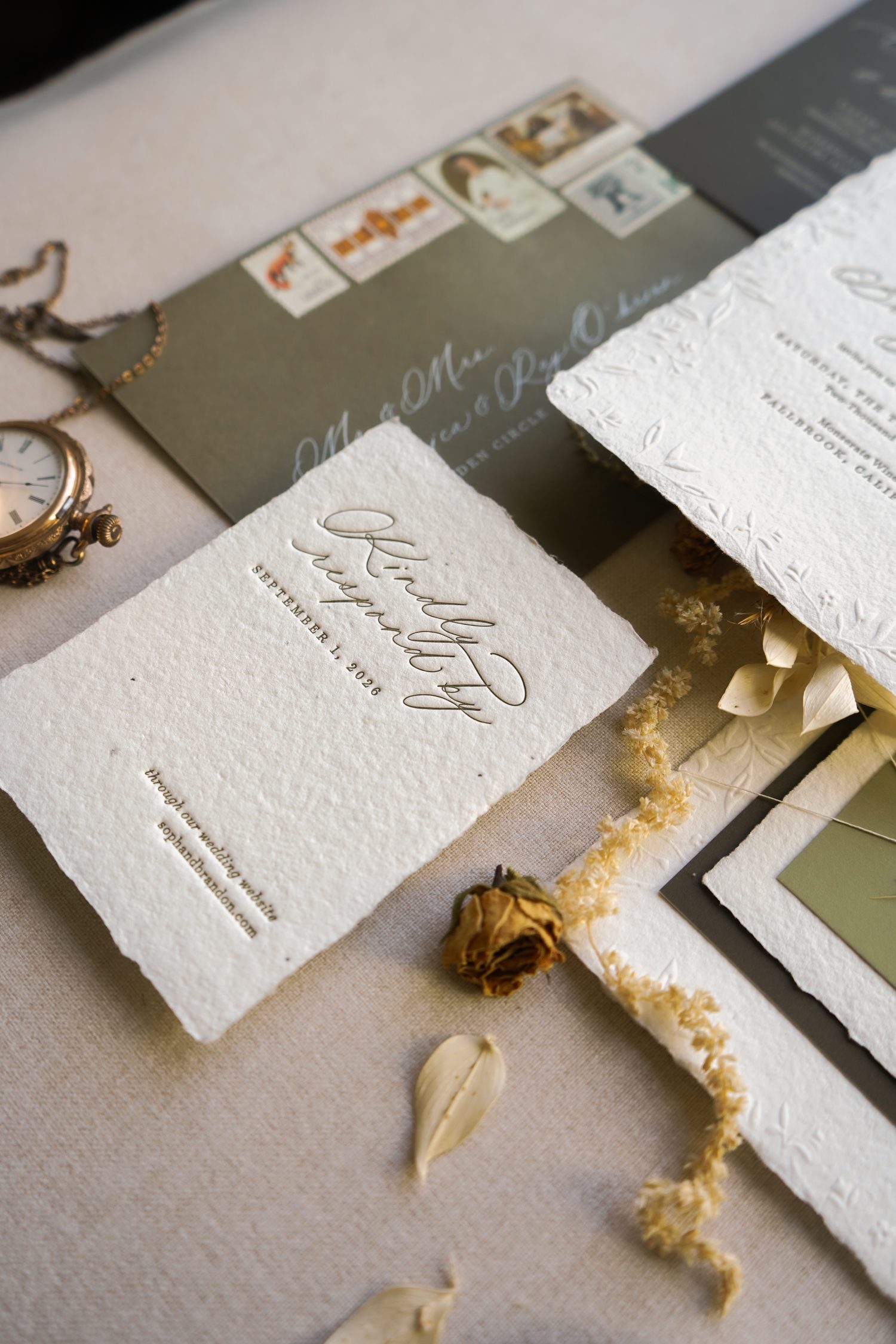
The seeds read as small, textured specks scattered through the sheet — closer to the flecks in a good handmade cotton paper than to anything obviously agricultural. Just enough to add character. Never enough to compete with your design.
From across a table, it looks like beautiful handmade paper. Up close, you notice it’s holding something.
designed for the paper, not on top of it
I’ve been a paper lover my whole life. A graphic designer since 2011. A letterpress printer since 2012.
Which means I’ve spent more than a decade refining one very specific thing: how to letterpress print on handmade paper.
It’s a real craft. A soft, thick sheet takes an impression like nothing else — the type presses down into the surface and catches light along every edge. But handmade paper also has a mind of its own, and a design that ignores that will fight it the whole way.
So none of my designs are drawn first and placed on the paper second. Every one of them is created with the paper in mind, so the two arts hold each other up instead of competing.
what it costs
One of the biggest questions I get is how much more does seeded paper cost?
Nothing.
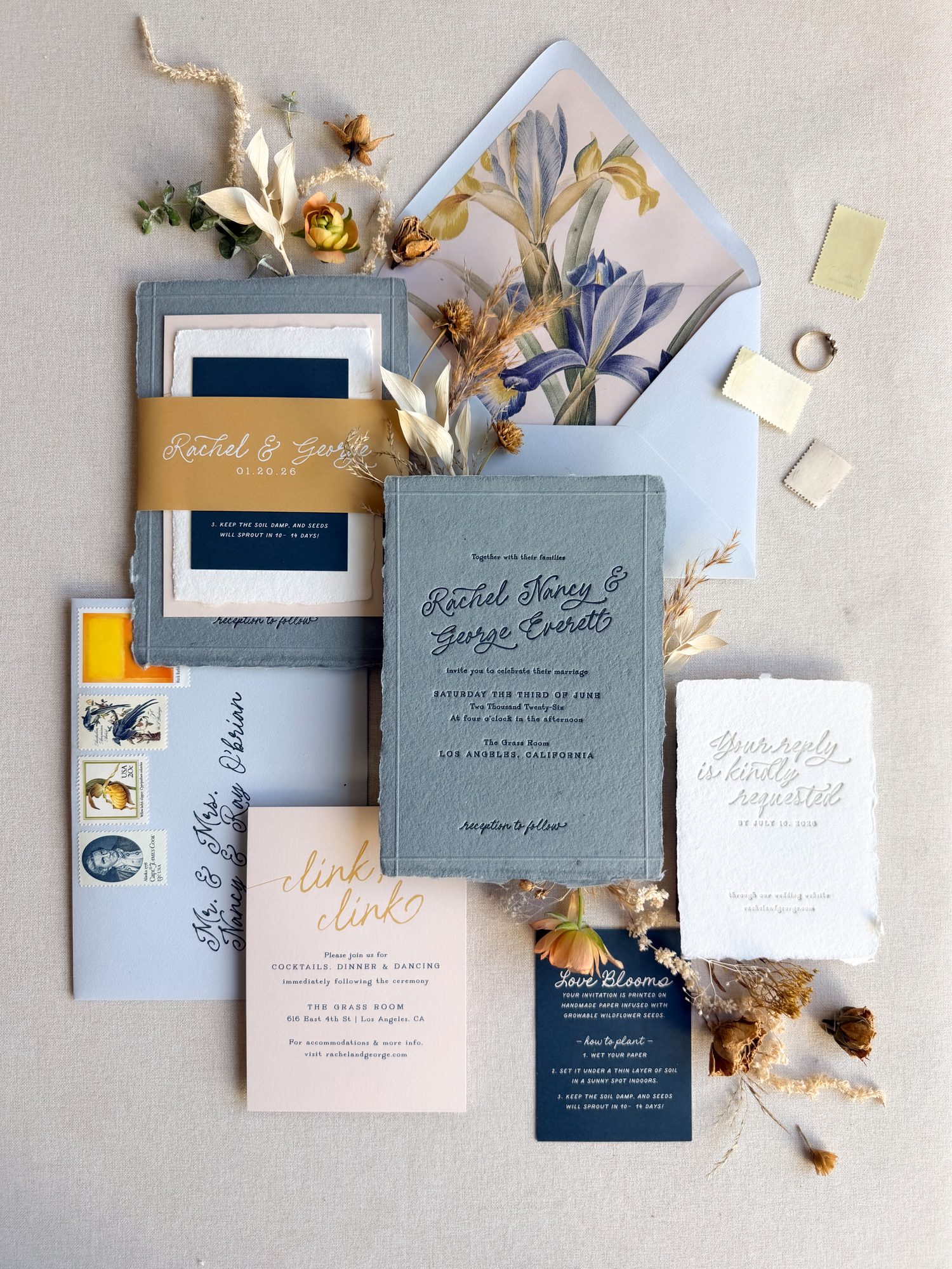
Terra’s whole backbone is sustainability, so it never sat right with me to charge couples extra for making the better choice. There’s zero cost difference between handmade paper and seeded handmade paper in my studio — even though the seeded sheets do cost me a little more to bring in for you.
Choosing the beautiful, eco-friendly option should feel like a reward. Not a line item.
the timeline
It’s not so much the handmade paper that shapes my timelines. It’s the printing method.
Letterpress is an ancient craft, and I’ve kept it that way. My press runs on zero electricity. Everything is done by hand — inking the press, pulling each card, one at a time.
And because every order is made just for you, I’m ordering your materials and supplies at the time of printing. Nothing sits on a shelf waiting.
Between waiting on your materials to arrive and printing everything by hand, production takes about 2–3 weeks.
That’s production only. It doesn’t include the design phase, where we go through every piece of your suite and customize it together.
You can view my full timeline breakdown here.
how your guests plant it
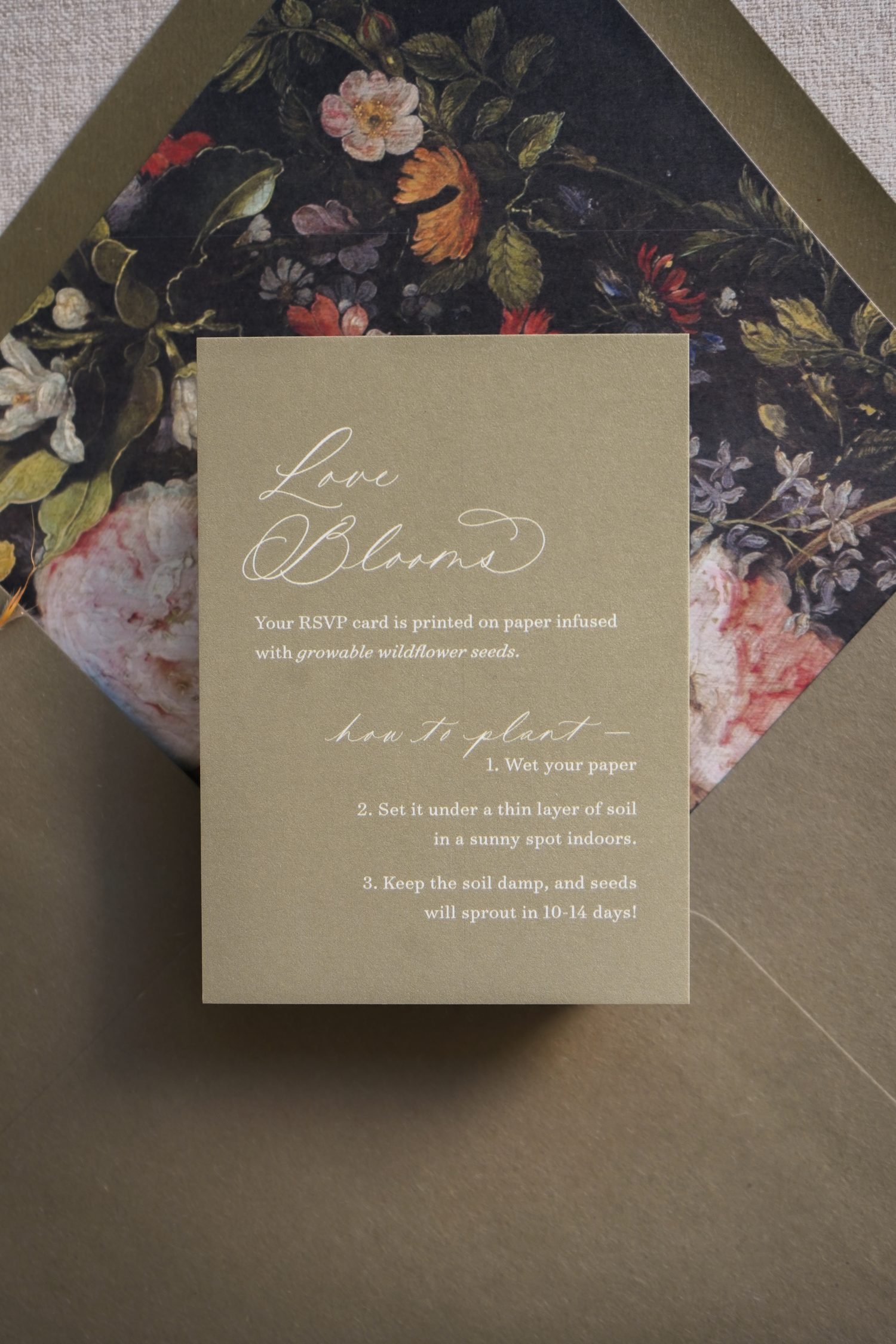
The instructions are short enough to fit on a small insert card, which is exactly what you see in the image above.
- Soak the invitation in water.
- Set it under a thin layer of soil, somewhere sunny.
- Keep it damp.
- Sprouts appear in 7–10 days.
A small card tucked into the suite — something like a love worth growing — turns the whole thing into an invitation within an invitation. Your guests don’t just receive it. They participate in it.
frequently asked questions
Do they actually grow? Yes. As long as the paper is kept damp and gets light, germination is reliable. Poppies and alyssum are famously forgiving.
What if a guest wants to keep theirs instead? Then they keep it. Plenty of people frame the invitation and plant the RSVP card, or plant one and save one. There’s no wrong choice — you’re offering an option, not an assignment.
Do the seeds go stale? Not on any timeline that matters for a wedding. Stored somewhere dry and out of direct sun, the seeds stay viable well past your date.
Can it go through the mail? Yes. The seed varieties I use are chosen specifically for invitations — they’re small, they lie flat in the sheet, and they sail through the post office without any issue. The paper is thicker than standard stock, so it needs the right envelope and postage, but it travels beautifully.
Is it only for outdoor or rustic weddings? Not at all. Because the seeds are small and minimal, they’re not taking over your aesthetic. The design and the fonts you choose set the tone — not the paper. Some of the most striking seeded suites I’ve made have been black-tie: deep ink blue script, blind-debossed borders, moody envelopes.
gone, but not forgotten
Your invitation is the first thing your guests hold of your wedding. With seeded paper, it doesn’t have to be the first thing they throw away.
It becomes something else entirely — a pot of poppies on someone’s windowsill, a patch of black-eyed Susans in someone’s garden, blooming long after the last dance.
A drawer, a landfill, a trash can — or a garden.
Want to see (and feel) the paper yourself? Order a sample and I’ll send one your way.
Already picturing it? Browse my designs and find the one that sounds like you.
Ready to start? Inquire here and let’s build your suite together.
featured posts
Showit Website Design by With Grace and Gold | Images Courtesy of grace and ardor