


How Much Do Wedding Invitations Cost? A Realistic Breakdown
March 24, 2026
published on
filed under
Wedding invitations have a reputation for being expensive — and depending on where you look, prices can range from $50 to $15,000 for the same number of guests. That range isn’t random, and it’s not just markup. It reflects genuinely different products, processes, and experiences.
If you’re trying to figure out what you should expect to spend, here’s the honest version.
Why wedding invitation pricing Is so confusing
The stationery industry doesn’t make this easy. Most studios either hide their pricing entirely (“inquire for a quote”) or show a starting price that bears little resemblance to what most couples actually pay. Neither is particularly helpful when you’re trying to figure out if something is in your budget.
So let’s just talk about it directly.
Wedding invitation pricing is driven by four main factors: printing method, paper quality, quantity, and what’s included in your order. Understanding each one makes the numbers make a lot more sense.
The “price per invitation” problem
Before we get into numbers, there’s one thing worth addressing upfront, because it’s one of the most common points of confusion I hear from couples just starting their research.
Wedding invitations are not really a per-card product. Asking “how much is each invitation set?” is a little like asking how much a painting costs per square inch — the question doesn’t quite fit the thing.
Here’s why: letterpress and foil printing both involve significant upfront costs (custom plates, press setup, ink mixing, materials) that happen regardless of whether you print 20 invitations or 200. Those costs get spread across your total quantity, which means the per-piece cost actually decreases the more you order. A couple ordering 150 invitations pays considerably less per piece than a couple ordering 30 — even though the 150-count order costs more overall.
Add to that the fact that every suite is different. Two couples with the same guest count might have wildly different orders — one with just a main invitation and envelope, one with RSVP cards, details cards, envelope liners, wax seals, and envelope printing. Their quotes will look nothing alike, and neither is wrong.
My honest recommendation: start with a budget, not a per-card calculation. Decide what you’re comfortable spending on stationery overall, then get a few custom quotes and see what’s possible within that range. A good stationer will work with what you have and help you prioritize the pieces that matter most.
The four things that drive cost
1. printing method
This is usually the biggest variable. Here’s a rough landscape:
Digital printing is the most affordable option — typically $1–3 per piece depending on the printer. It’s fast, versatile, and can reproduce complex colors and photos beautifully. The trade-off is that it looks and feels like printed paper, because it is. There’s no texture, no impression, nothing tactile happening.
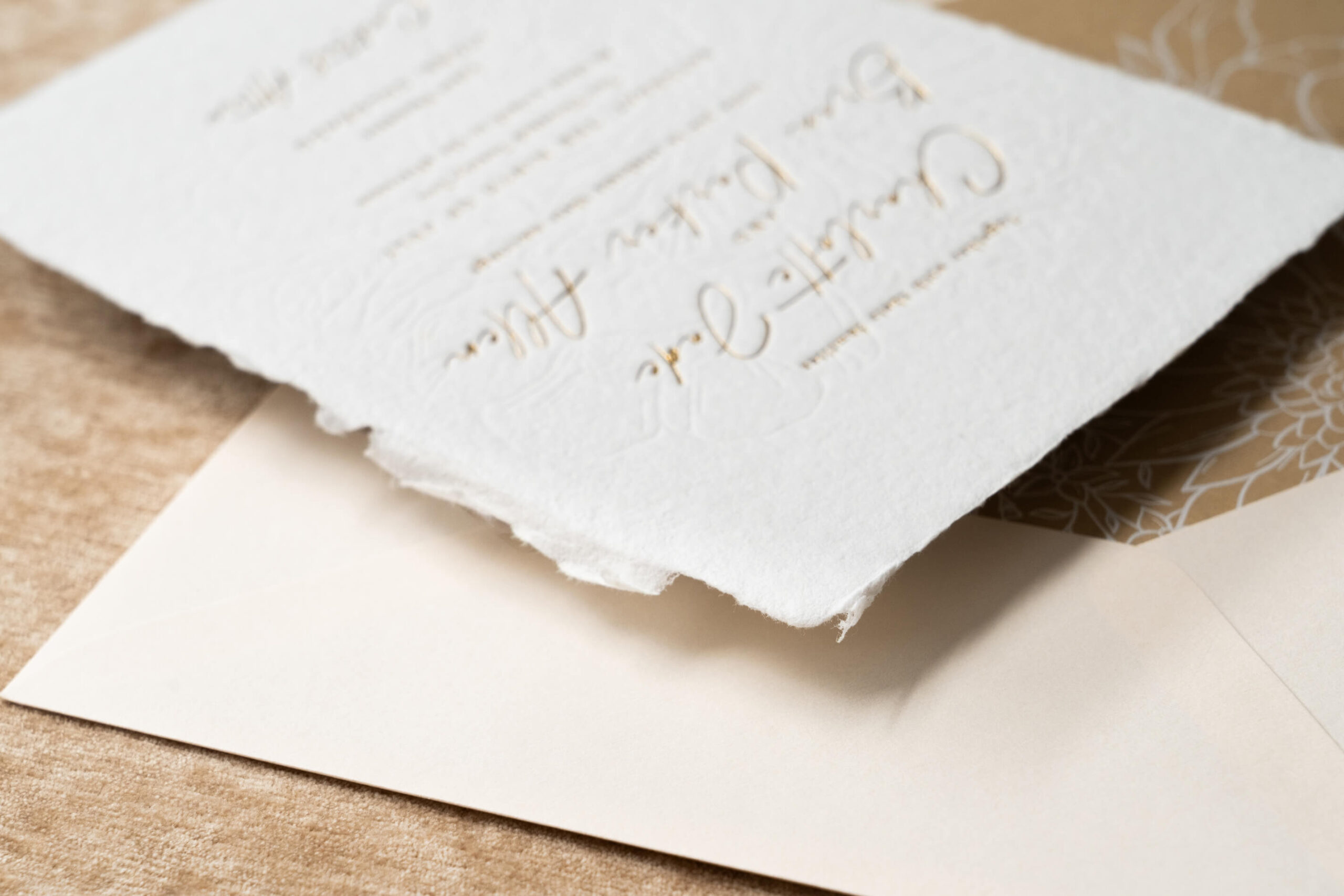
Letterpress and foil printing occupy a different category entirely — and between the two, foil typically runs slightly higher. Both involve custom setup, hand-press time, and materials that digital printing simply doesn’t require.
With these methods, every invitation is run through the press by hand, one sheet at a time, one color at a time. Ink is mixed by hand, custom plates are made for each order, and the press is calibrated for that specific paper. The result is an impression you can feel — the design is literally pressed into the paper.
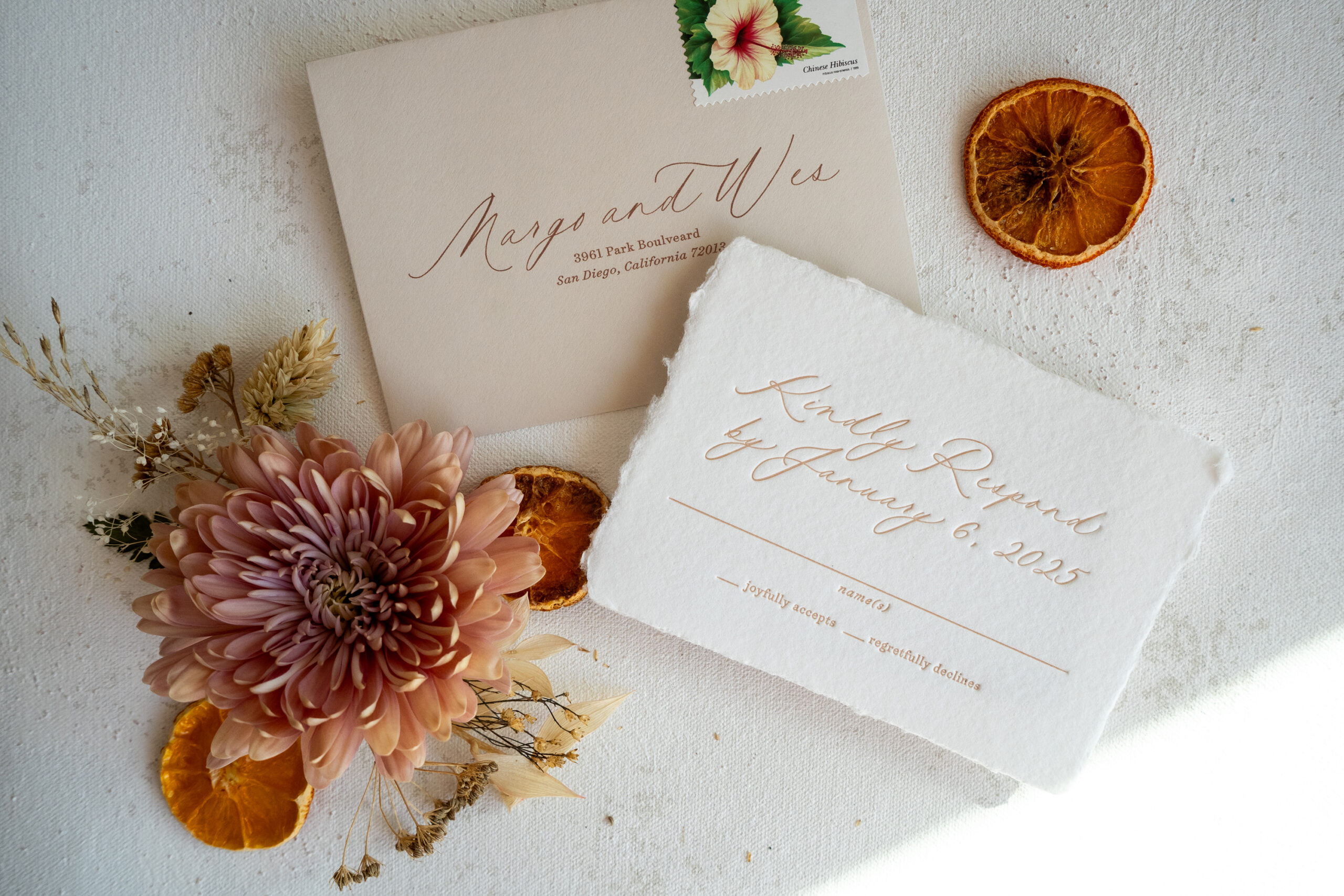
With foil, a metallic or pigmented foil is applied to the paper using heat and a custom die, creating that mirror-bright finish that catches light in a way ink can’t replicate. Worth noting: real foil printing involves actual pressure and impression, similar to letterpress. Digital foil — a newer process that mimics the look — doesn’t have that physical quality, and the difference is noticeable when you hold both.
At Terra Paper, I print everything by hand on an antique letterpress or foil press. It’s slower and more labor-intensive than digital, and that’s reflected in the price — but it’s also why people frame their invitations instead of recycling them.
2. paper quality
Not all paper is created equal, and the difference is immediately obvious when you hold two invitations side by side.
Standard cardstock (the kind used for most digital invitations) is smooth, uniform, and flat. It gets the job done.
At the other end of the spectrum, handmade paper — made one sheet at a time from recycled fibers — has natural texture, deckled edges, and a weight and warmth that no machine-made paper quite replicates. It also tends to hold letterpress impressions beautifully, because the softness of the paper accepts the pressure in a way a harder stock doesn’t.
One thing worth knowing: there’s a difference between genuine handmade paper and what I’d call faux handmade — standard machine-made cardstock where each edge has been torn by hand to mimic the look of a natural deckle. It’s a common technique, and from a distance it can look similar. But the paper itself is the same flat, uniform cardstock underneath, and the torn edges tend to look more ragged than refined. It also produces a fair amount of waste for a purely cosmetic effect. Genuine handmade paper has texture throughout — in the surface, the weight, the way it holds ink — not just at the edges.
Paper cost varies significantly. Mass-produced cardstock is cheap. High-quality handmade paper, especially in specialty types like seeded paper, costs considerably more per sheet — and that cost is part of what you’re paying for when you order from a studio like mine.
3. quantity
As I mentioned above, letterpress and foil printing both involve significant setup time and materials before a single invitation is printed. That means the per-piece cost is higher at low quantities and decreases as quantity increases — the setup cost gets spread across more pieces.
This is why most letterpress studios (including me) have minimum order quantities. Mine is 20 invitations. Below that, the economics simply don’t work for either of us.
As a general rule: if you’re ordering 50 invitations, expect to pay more per piece than someone ordering 150. The math evens out, but it’s worth knowing when you’re comparing quotes.
4. what’s included
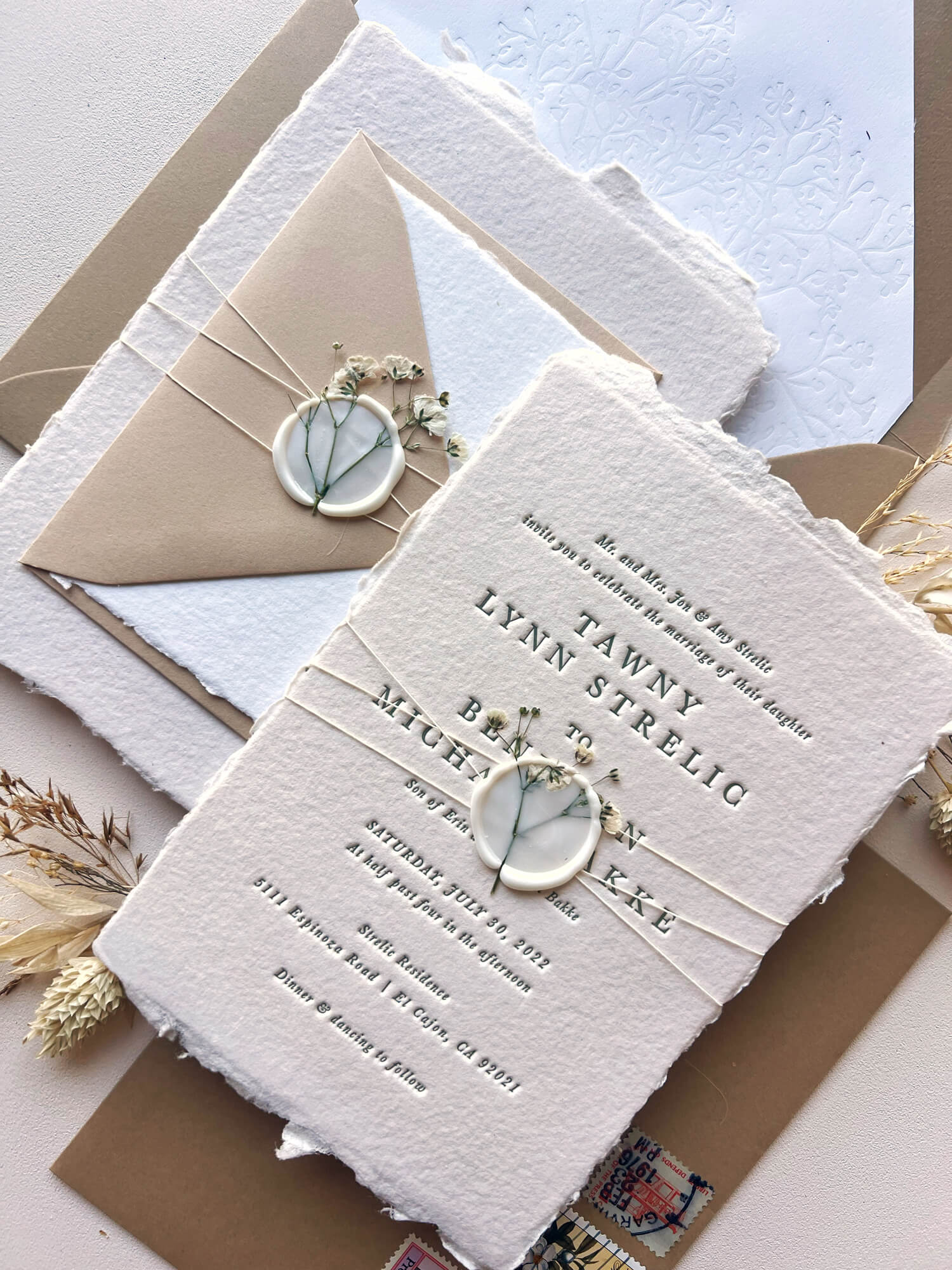
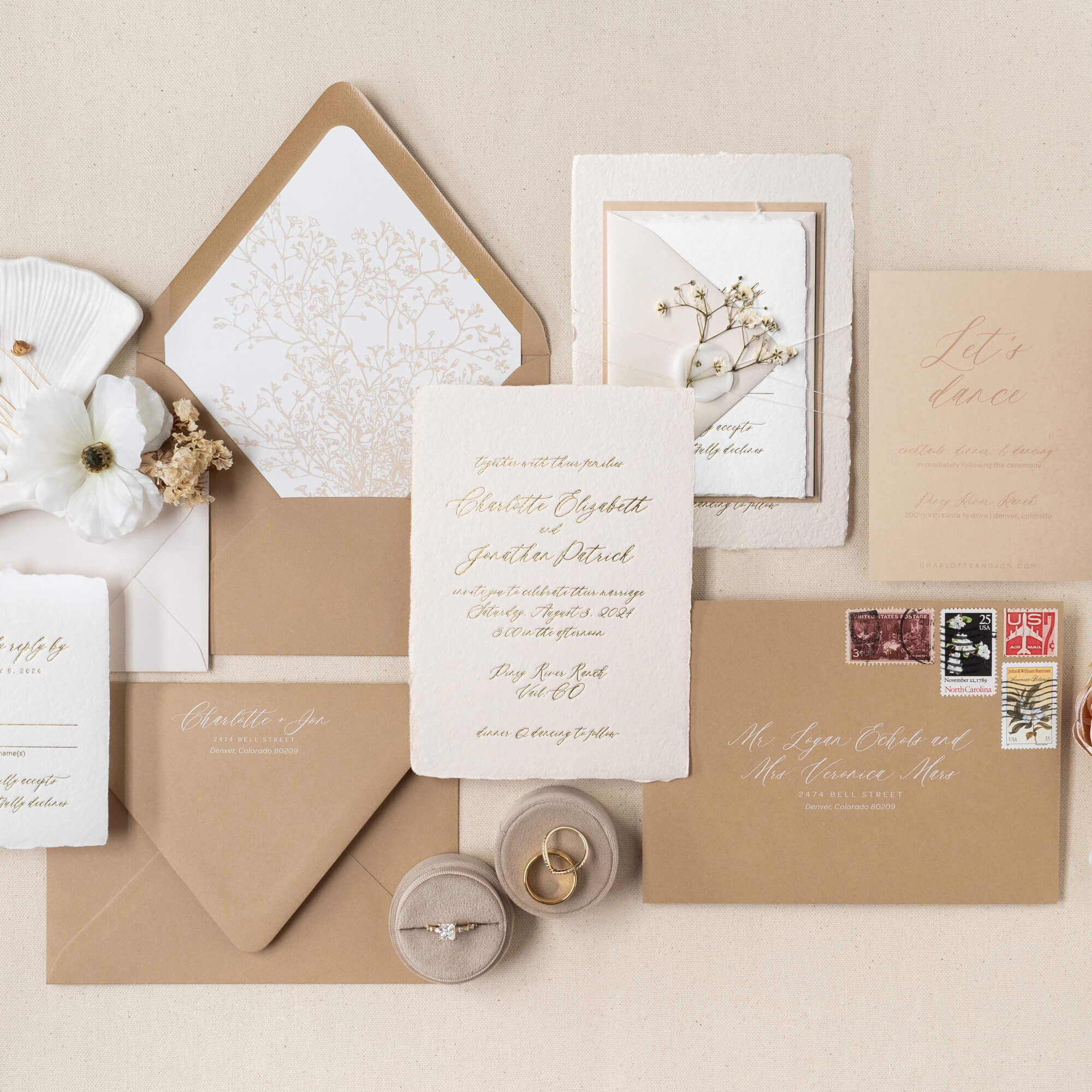
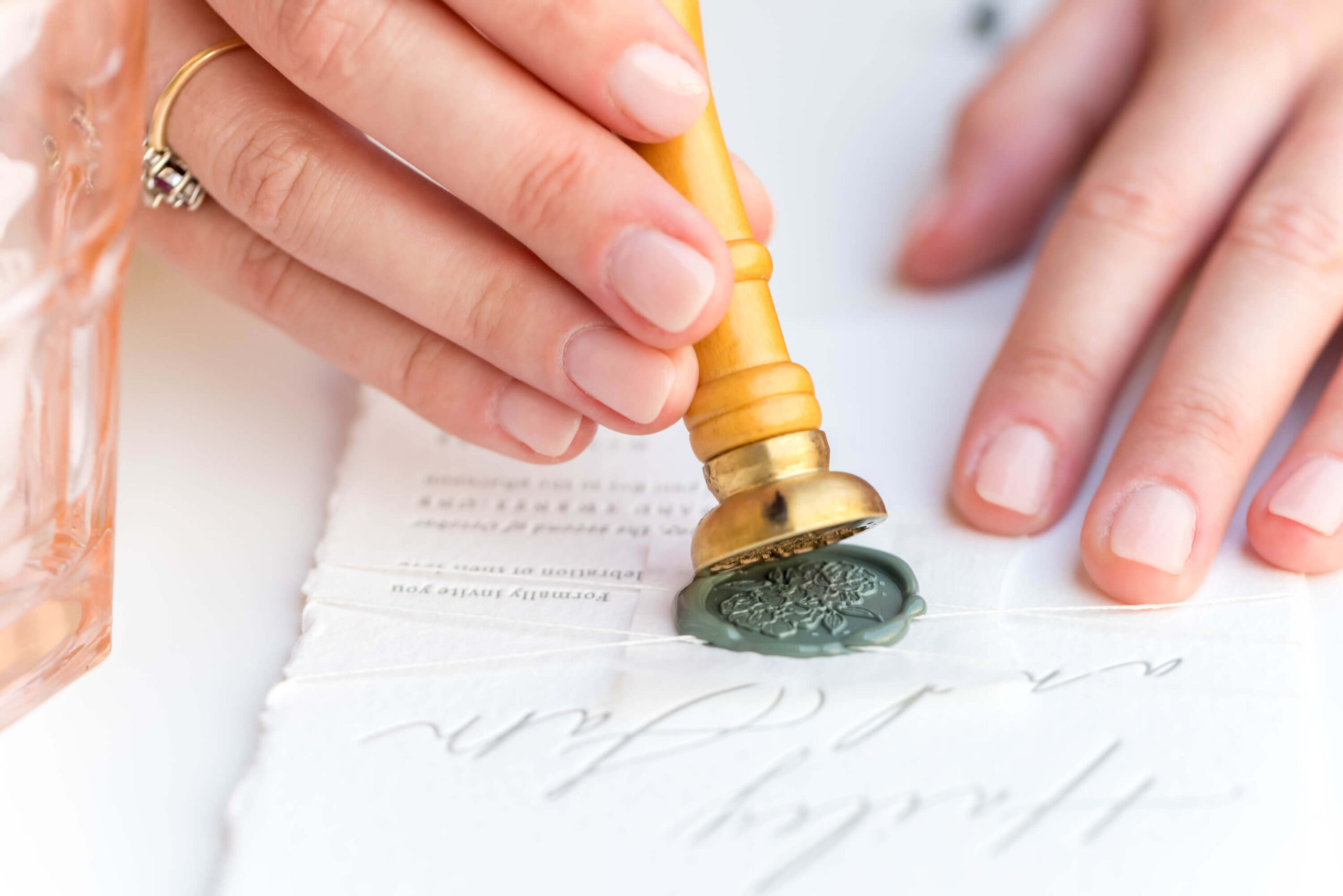
“Wedding invitations” can mean just the main card and envelope — or it can mean a full suite with RSVP cards, details cards, envelope liners, wax seals, belly bands, and envelope printing. The difference in price between a minimal order and a fully built-out suite can be significant, and it’s often why two couples with the same guest count end up with very different quotes.
Every piece you add has its own cost: materials, setup, printing time, and assembly. It’s worth thinking carefully about what you actually need versus what would be nice to have — both for your budget and, honestly, for the environment.
So what should you actually expect to pay?
Here’s a rough framework:
Budget digital invitations (online templates, printed at home or through a print service): $50–$300 total
Mid-range digital printing (professional stationer, quality cardstock, custom design): $300–$800 total
Entry-level letterpress or foil (smaller studios, lower quantities, minimal suite): $1,000–$2,500 total
Artisan letterpress on handmade paper (small-batch, hand-printed, full suite): $1,500–$4,500 total
Fully custom letterpress (design created from scratch, bespoke process): $5,000–$15,000+
At Terra Paper, most invitation orders fall in that $1,500–$4,500 range. Where you land within that depends on your guest count, the items you choose, and whether you add things like envelope printing or wax seals. I send every couple a fully itemized custom quote so there are no surprises.
What are you actually paying for?
This is the question worth sitting with, because it reframes the whole conversation.
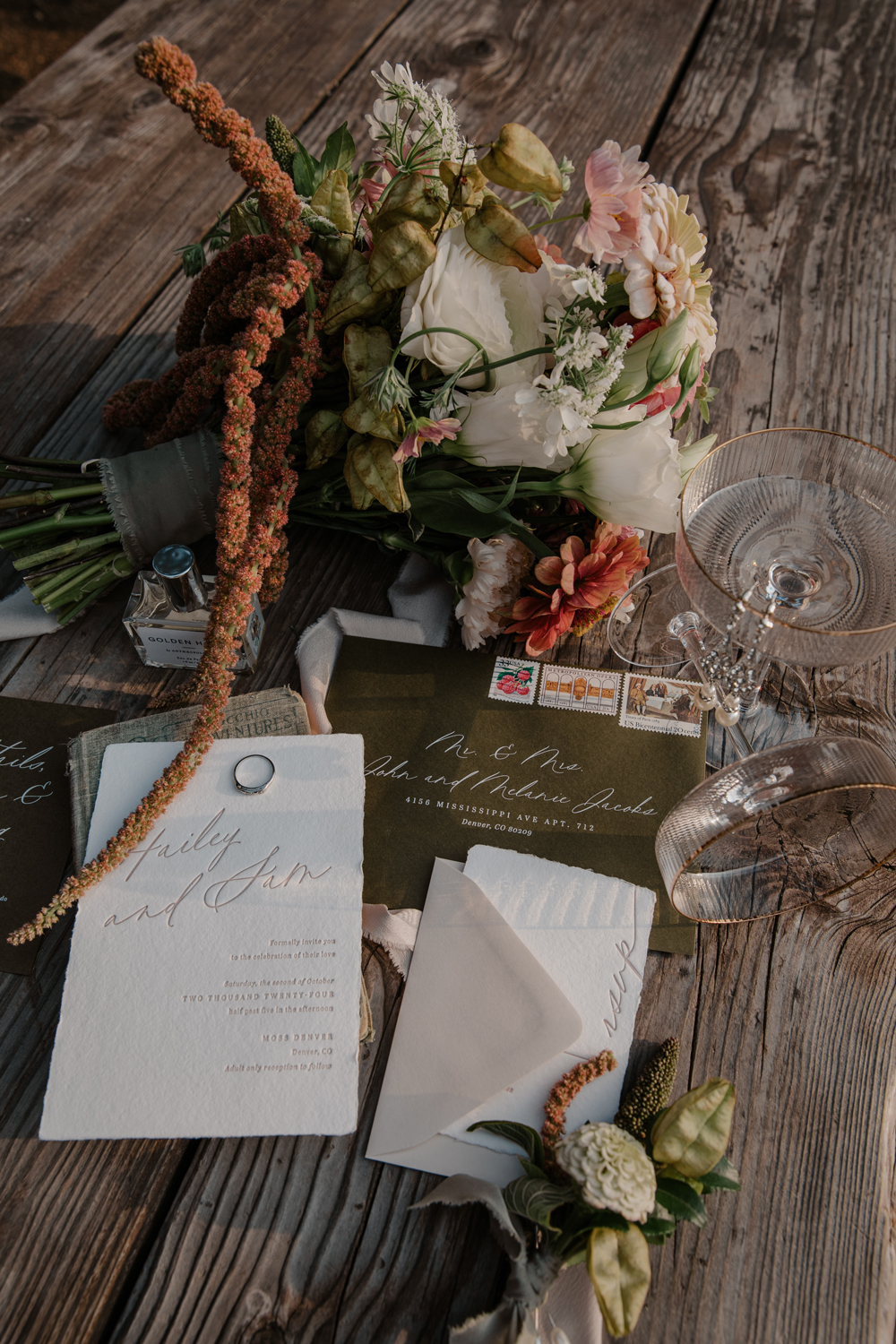
When you order letterpress invitations on handmade paper, you’re not paying for ink on cardstock. You’re paying for the hours of press time, the hand-mixed ink, the custom plates made for your specific design, the paper crafted one sheet at a time from recycled fibers, and the person who feeds each sheet through the press and checks every single one before it goes into your box.
It’s a different category of thing than a digital invitation — not better or worse for every couple, but genuinely different in what it is and what it communicates. The couples who order letterpress invitations tend to be the ones who want their guests to feel something the moment they open the envelope.
A few ways to make the budget work
If letterpress invitations are something you want but you’re trying to keep costs manageable, a few things actually move the needle:
Keep the suite minimal. A stunning main invitation and envelope with a simple details card is a complete, elegant suite. Every additional piece adds cost — choose the ones that genuinely serve a purpose.
Use your wedding website. An RSVP card with your website URL replaces the traditional RSVP card and return envelope entirely, which eliminates two pieces from your order.
Do digital save the dates. A lot of couples opt for simple digital save the dates and put that budget toward letterpress invitations instead. The save the date is a heads up. The invitation is the experience.
ready to see what your order would cost?
I send every couple a fully itemized custom quote — no pressure, no commitment required. Just fill out the inquiry form and I’ll put together a quote specific to your guest count, your chosen design, and the items you’re considering.
Get your custom quote
Not sure which design you want yet? Browse the collection or order a sample to see the paper and printing quality in person before you decide.
featured posts
Showit Website Design by With Grace and Gold | Images Courtesy of grace and ardor